Brunello has a built-in advantage over every other wine in this series: by law, it can't leave Montalcino until it's five years old. The region does your first five years of cellaring for you. So, the bottle you just bought is already partway there. The question is whether it needs another five on top, and that's what the chart below answers.
- Regular Brunello is drinkable on release and usually best from eight to twenty years after the vintage.
- Riserva waits an extra year to release and deserves an extra five in your cellar.
- Rosso di Montalcino is the escape hatch — same producers, same grape, released young and priced at a third of Brunello. It's what you drink while your Brunello sleeps.
- Traditional producers run longer. Big old casks and old-school methods make Brunello that rewards decades. If the producer is famous for tradition, add years to everything below.
| Vintage | The year | When to drink |
|---|---|---|
| 2021 | Just released — elegant, the third of a great trio | On shelves now at five years old. Serious bottles: 2027–2045 |
| 2020 | Lighter, nice early | Now–2038 |
| 2019 | Outstanding. People argue whether it beats 2016 | 2026–2042 |
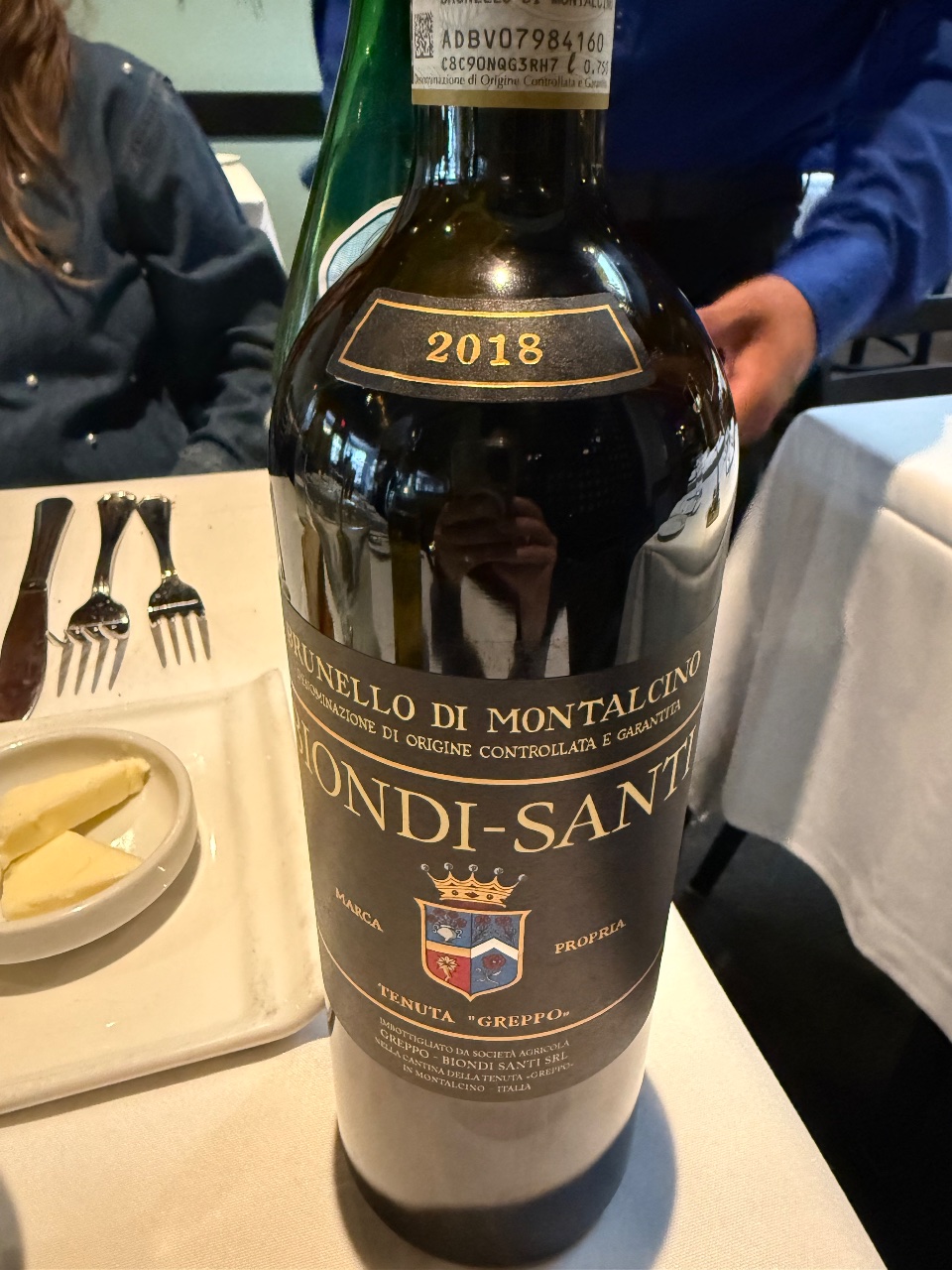
| 2018 | Lighter, uneven | Now–2033 |
| 2017 | Hot and dry — decent, not for keeping | Now–2032 |
| 2016 | Excellent — Brunello superfans' darling of the decade | Just opening: 2026–2045 |
| 2015 | Very good in a warmer register — rich | Now–2040 |
| 2014 | The rainy one — many producers made no Brunello at all | If it did get made, drink it now |
| 2013 | Classic and fresh | Now–2033 |
| 2012 | Very good, balanced | Now–2032 |
| 2011 | Warm year, earlier wines | Now–2030 |
| 2010 | The legend | Now–2035. The top bottles are exactly where you want them |
The pattern worth noticing: 2019, 2020, and 2021 are Montalcino's version of the great trio — and because Brunello releases late, all three are on shelves right now at five-plus years old. There's no other region where you can buy a great, half-matured vintage this easily.
Tradition stretches the clock. Montalcino splits between traditionalists — big neutral casks, long aging, wines built for decades — and modernists making rounder, earlier wine. The price and the reputation usually tell you which you're holding.
2014 taught a lesson worth knowing: in bad years, good producers here declassify. They put everything into Rosso di Montalcino instead of making bad Brunello. Which means a Rosso from a terrible year can be a quiet steal, and a Brunello from one deserves suspicion.
Storage counts. Sangiovese's acidity keeps it alive a long time, but only if the bottle lived cool and dark.
Young Brunello leads with fruit and mouth-drying tannin. Impressive, maybe a little mean, wants a steak or a ribollita. Great Brunello is where Sangiovese earns the price: the cherry goes darker and dried, and leather, tobacco, balsamic, and something like a dusty spice cabinet show up behind it. The acidity stays strong the whole way. That's the grape's signature, and it's why old Brunello still feels alive when other old reds feel tired.
Past-peak Brunello thins out and turns to vinegar-adjacent sourness with the fruit gone.
What's the difference between Brunello and Rosso di Montalcino?
Same grape, same producers, same hills. Rosso releases young, costs a third as much, and is meant for dinner this year. Brunello is the long game. A good cellar strategy: drink Rosso while your Brunello ages.
Should you decant Brunello?
Young Brunello, yes — an hour or two helps it relax. Older bottles need only a gentle pour off the sediment.
Is 2016 or 2019 the better vintage?
The people of Montalcino will argue this for the next thirty years. Practical answer: 2016 is a touch more classic, 2019 a touch more complete, and you should own both while they're still on shelves.
How long does Brunello last after opening?
Day two is often better than day one — the acidity holds everything together. Cork it, leave it on the counter, finish it tomorrow.