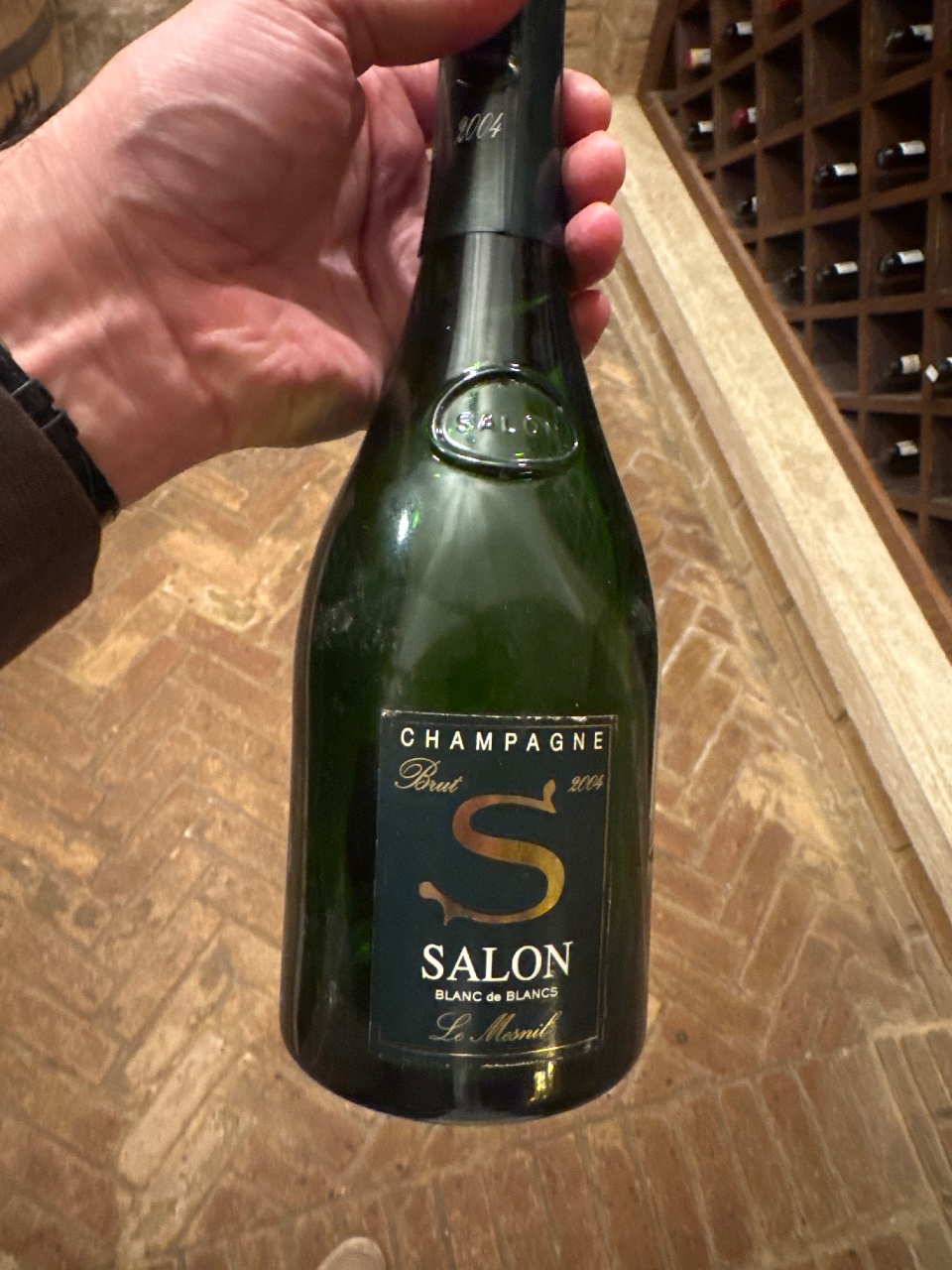
Somewhere in your home there is probably a bottle of Champagne being saved for an occasion that hasn't arrived yet. Here's the thing: most Champagne is not built for saving. If the label doesn't have a year on it, the producer already aged it for you, and it's ready the day you buy it. The bottles that improve with keeping are the ones with a vintage on the label — and those follow the chart below.
- Non-vintage (NV) Champagne — no year on the label, which is most of what exists. This is released ready. Drink it within two or three years of buying it. It won't get better under your bed; it will just get older.
- Vintage Champagne (a year on the label) is a different animal: built to develop for ten to twenty-five years from the vintage, sometimes longer.
- Prestige bottles — the famous names with the famous prices are the longest-lived wines in the region. Opening one at fifteen years old is right on time, not late.
- Champagne is wine. Drink it with dinner, not just on New Years. It's arguably the most food-friendly wine there is, and treating it as a toast-delivery prop is how bottles end up gathering dust.
| Vintage | The year | When to drink |
|---|---|---|
| 2019–2020 | Strong years — the first vintage releases are just arriving | Early days: 2028–2045 for serious bottles |
| 2018 | Warm and generous — the best bottles carry it with ease | 2026–2042 |
| 2016–2017 | Tricky years, fewer declarations | If a top producer made one, trust them: 2026–2038 |
| 2015 | Warm and uneven — good bottles exist, choose carefully | Now–2035 |
| 2014 | Decent, unflashy | Now–2035 |
| 2013 | Cool and late — tense, fine, built for the long haul | Just getting started: 2025–2045 |
| 2012 | Excellent — one of the most complete years in memory | Now–2040. In its stride |
| 2010–2011 | Mostly not declared. If you see one, that's unusual | Drink it soon and consider it a curiosity |
| 2009 | Generous, friendly, earlier-drinking | Now–2032 |
| 2008 | The legend — structured, precise, the modern benchmark | Now–2045. No rush whatsoever on the top bottles |
A gap in that table is information too: when most houses skip a year — like 2010 and 2011 — it means the grapes weren't worth putting a year on. The vintage system is the region grading its own work.
Chardonnay ages longest. Champagne made mostly or entirely from Chardonnay (the label may say 'blanc de blancs') is the marathon runner. Pinot-heavy Champagnes are usually rounder and readier sooner.
Storage matters more here than anywhere. Champagne is the most fragile thing in your collection. Light and heat are its enemies. A bottle that lived on top of the refrigerator for two years is already gone.
Champagne doesn't fade politely with age; it transforms. The bubbles soften, the citrus and green apple turn into brioche, honey, roasted nuts, sometimes something like soy or old sherry. Some people chase that flavor their whole lives. Other people taste it once and wish they'd opened the bottle five years earlier. Neither is wrong, but you should find out which one you are.
Does unopened Champagne go bad?
Eventually, yes. Non-vintage bottles are at their best within about three years of purchase and slowly lose their spark after five. Vintage Champagne from a good year, stored properly, is a decades-long proposition. Stored badly (warm, bright, upright for years) any Champagne can die young.
How long does Champagne last after opening?
With a proper Champagne stopper in the fridge, a day or two. The spoon-in-the-bottle trick does nothing. Buy the four-dollar stopper.
Should Champagne be chilled before serving?
Yes, but not arctic. Ice-cold mutes everything interesting about a good bottle. Fifteen minutes out of the fridge before pouring is the move for anything you paid real money for.
Is expensive Champagne worth it?
Sometimes, if you know what to spend money on. The jump from $15 sparkling wine to $45 grower Champagne is enormous. The jump from $45 to $250 is real but you need to know what you're doing. There's a lot of bad, expensive champagne out there with very recognizable labels.