Red Burgundy has a reputation for being complicated, and the people who love it do not exactly dispel the reputation. But the drinking-window question has a fairly simple answer: village wines are built for three to eight years, premier crus for eight to fifteen, grand crus for twelve to twenty-five. That covers most bottles. The vintage chart handles the rest.
- Village wine — the label says a town, like Volnay or Gevrey-Chambertin, and nothing else — is Burgundy's weeknight tier. Drink it young, have some fun.
- Premier cru (a town plus a vineyard name) is the middle of the pyramid and the sweet spot for patience: eight to fifteen years from a good vintage.
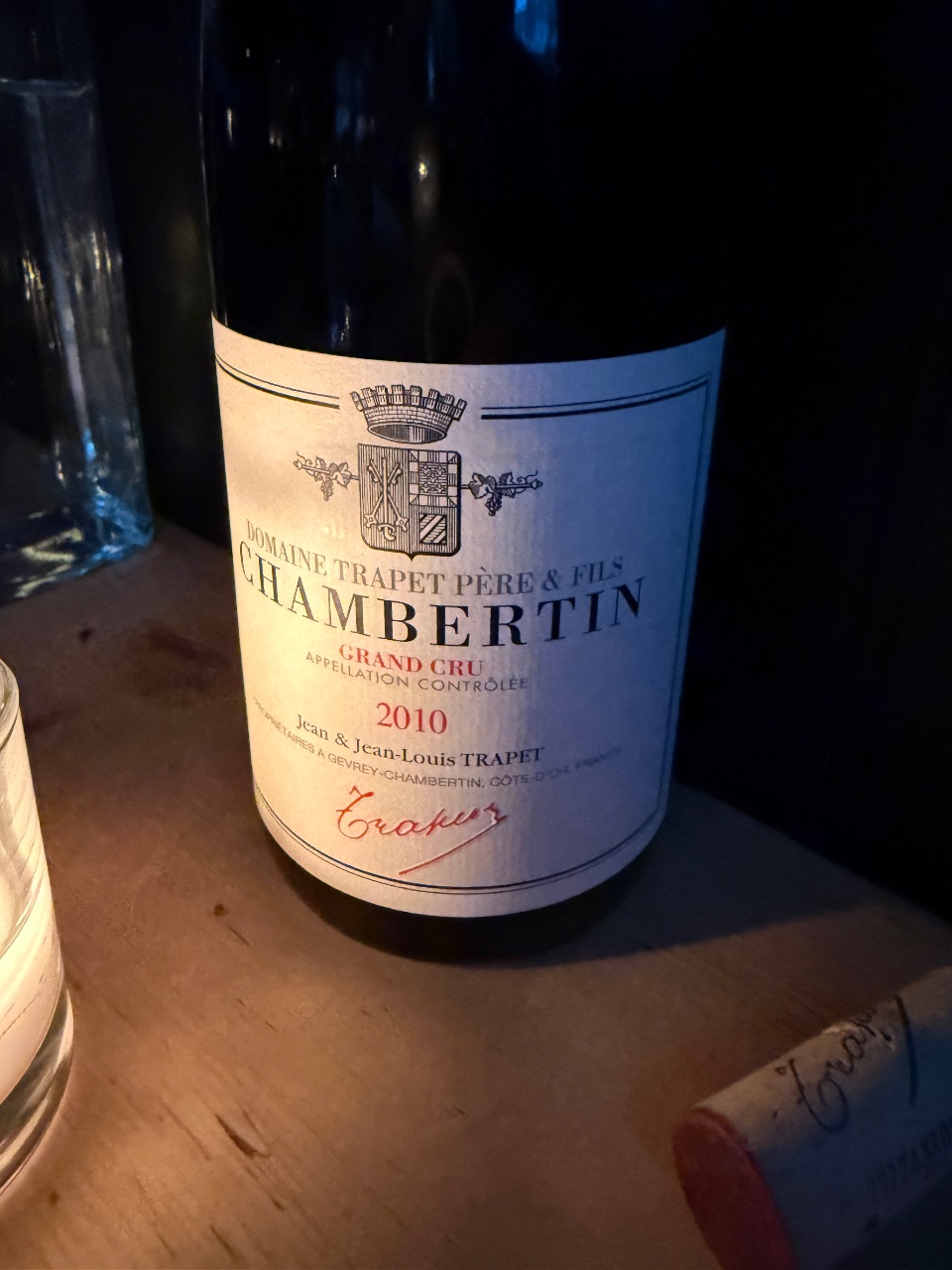
- Grand cru (just a famous vineyard name, no town) is built for the long haul — but even these are more generous young than their price suggests. You're rarely ruining anything by opening one at ten years old with the right dinner.
- The producer outranks everything. In Burgundy, who made the wine matters more than the vineyard, the village, or the vintage. A great producer's village wine routinely outlives an average producer's premier cru.
| Vintage | The year | When to drink |
|---|---|---|
| 2024 | Small crop but promising — too early to grade | First bottles are landing now |
| 2023 | Great but inconsistent...the most producer-dependent year in a while | Now–2035 |
| 2022 | An excellent year — ripe fruit, fresh underneath | Village: 2026 on. Serious bottles: 2029–2048 |
| 2021 | Tiny frost year — light, pretty, old-school | Drink early and enjoy it. Village now; top wines 2027–2040 |
| 2020 | Dark and powerful, less consistent | Wait. 2027–2045 for serious bottles |
| 2019 | Nice and balanced, great across the board | Village now–2035. Top wines: 2027–2050 |
| 2018 | Warm and generous, best drunk on the earlier side | Now–2035 |
| 2017 | Open and charming from the start | Now–2032. Don't overthink these |
| 2016 | Frost cut the crop; what survived is excellent | Now–2040 for the top wines |
| 2015 | Powerful, structured, built to go | Village: now. Serious bottles: 2025–2045 |
| 2014 | Fresh, medium-weight, honest | Now–2032 |
| 2013 | Cool and late — uneven, producer-dependent | Now–2033, and choose the producer carefully |
| 2012 | Small crop, concentrated | Now–2035 |
| 2011 | Light and early | Drink now. Past 2028, you're gambling |
| 2010 | Classic and superb | Now–2040. Top bottles are in no hurry |
The producer. It can't be said enough in Burgundy. If you know the producer is serious, lean toward the later end of every range above. If it was an anonymous bottle from a grocery shelf, drink it this year. Or, on second thought, don't drink wine from grocery stores.
Storage counts. Red Burgundy is thinner-skinned than most wine, literally and figuratively. Heat damage shows up here faster than almost anywhere.
Pour a glass before you commit the bottle to dinner. Young red Burgundy that needs time smells like fruit and not much else — pretty but simple, with an edge of acidity that pokes out. Ready Burgundy is the whole reason people ruin their finances over this region: the fruit turns darker and quieter, and things show up that aren't fruit at all — forest floor, dried flowers, something faintly like good broth. When a Burgundy smells like more than Pinot Noir, it's ready.
Past-peak Burgundy goes pale, smells like tea and old leaves, and tastes washed out.
Should you decant red Burgundy?
Usually no, or only briefly. Burgundy is more fragile than big reds — an hour in a decanter can cost you the perfume that makes it worth the money. Open it thirty minutes early, pour a taste, and let the glass do the work.
Can you drink grand cru Burgundy young?
You can, and it will still be good — that's the trap. It will also be a fraction of what it becomes. If you only have one bottle, wait. If you have three, opening one young is how you learn.
How long does red Burgundy last after opening?
Younger bottles are often better on day two. Older bottles (fifteen years and up) start fading within hours, not days. Drink the old ones the night you open them.
Do these windows apply to white Burgundy?
No — whites run on a different clock, and mostly a shorter one than people assume. That's its own guide.