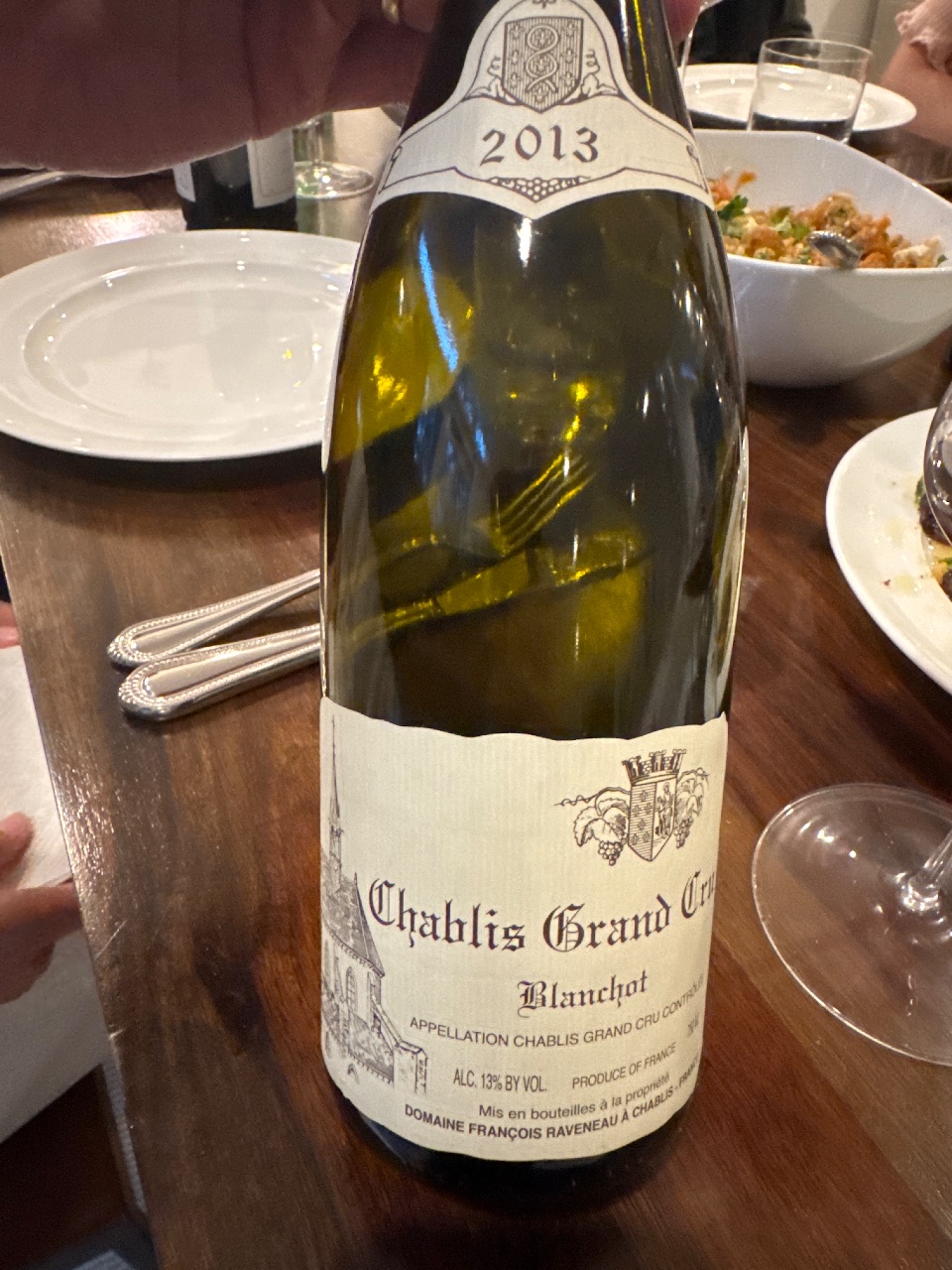
In the red Burgundy guide we said whites run on a different clock. Here's the clock: most white Burgundy is best between two and eight years old, and only the top tier earns more. If that sounds early to you, you learned your wine rules before the region's oxidation problem rewrote them. The old advice — hold your good Meursault fifteen years — died about twenty-five years ago. A lot of the internet hasn't noticed.
- Bourgogne blanc and village wines — Meursault, Puligny-Montrachet, Saint-Aubin with no vineyard name — are at their best from two to six years old. Drink them on the fruit and the energy.
- Premier crus reward five to twelve years. This is the sweet spot of the whole category.
- Grand crus can go eight to twenty, but at that age you're also playing the oxidation lottery (more below). Even the people who can afford Montrachet drink it younger than they used to.
- Chablis is the exception. Higher acid, less oak, and a better track record with age. Good premier cru Chablis at ten years old is one of wine's great bargains in longevity.
| Vintage | The year | When to drink |
|---|---|---|
| 2024 | Small crop, fresh and electric | Early bottles: now–2032 |
| 2023 | A big, sunny crop — friendly and fresh | Now–2031 |
| 2022 | Excellent — ripe and balanced, the complete package | Now–2033 |
| 2021 | Frost destroyed the crop; what survived is racy and classical | Now–2032 |
| 2020 | Great — structured, precise, real acidity | Now–2032 |
| 2019 | Small and concentrated, very good | Now–2030 |
| 2018 | Warm and generous, moving fast | Drink up |
| 2017 | Excellent whites, great from the start | Now–2028 for the best; drink the rest |
| 2016 | Frost year, tiny quantities | Drink now |
| 2015 | Rich, built for early pleasure | Should be gone already |
| 2014 | The classic, a benchmark white year | Top bottles are still great and will stay great: now–2028. Everything else: now |
Starting in the mid-1990s, white Burgundy developed a fault the region still hasn't fully solved: bottles began oxidizing years ahead of schedule — turning deep gold, smelling like bruised apples and old sherry, dead at eight years old when they should have been hitting their stride at fifteen. It's called premature oxidation, or premox, and it's random: one bottle from a case is fine, the next is gone.
Producers have improved corks, sulfur, and pressing since, and the worst years are behind us. But the practical lesson stuck: the risk of drinking white Burgundy too early is disappointment; the risk of too late is a dead bottle. When in doubt, open it.
Chablis runs long. If the label says Chablis, add three to five years to everything above. The style is leaner, the acid is higher, and the aging track record is the best in the category.
Oak and richness run short. The fatter and more golden the style, the earlier you should drink it.
Storage counts, again. Whites show heat damage faster than reds — a cooked white Burgundy tastes flat and vaguely like caramel in a bad way. Cool and dark or don't bother keeping it.
Straight from the fridge, a young white Burgundy might just taste like cold — give it fifteen minutes on the counter. White Burgundy fills out as it warms: citrus and fruit up front, then something rounder underneath. If it smells like a banged up apple, cider, or sherry, that's oxidation, whether it's four years old or fourteen.
Does white Burgundy age as long as red?
No. With rare exceptions at the top, whites peak earlier and fade faster. If you own both from the same year, drink the whites first.
Does Chablis age well?
Yes — it's the most graceful ager in white Burgundy. Premier and grand cru Chablis from good years are routinely excellent at ten to fifteen years old, and it costs less than the Côte de Beaune equivalent. If you want to cellar white Burgundy on purpose, cellar Chablis.
What temperature should white Burgundy be served at?
Warmer than your fridge. Straight-from-the-fridge cold mutes everything you paid for. Take it out fifteen minutes before pouring.
How long does white Burgundy last after opening?
A day in the fridge if you're lucky. Old bottles are more fragile. Finish your wine.